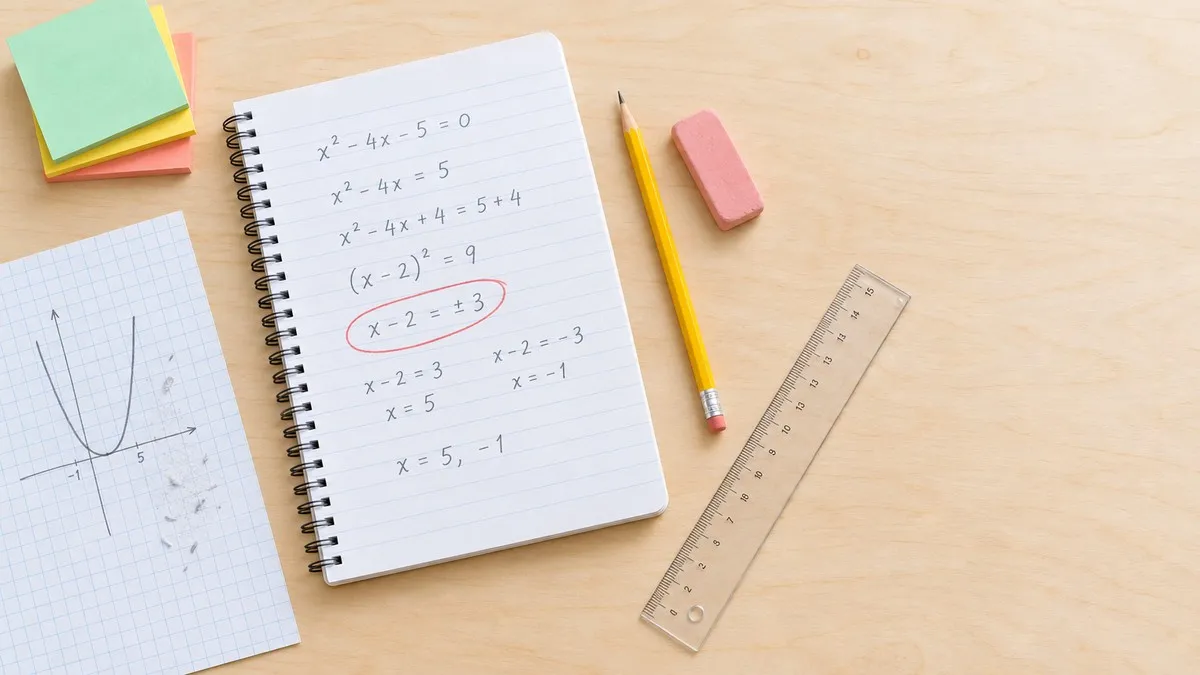
Gauth AI is a homework helper that reads a photographed or typed problem and returns a worked, step-by-step solution in seconds, mostly for math and science. On standard school problems it is fast and usually right. It is weaker on advanced or graphing questions, it has an open privacy lawsuit in the US, and research on answer-giving AI suggests that using it as a shortcut can leave you worse off on the test.
Gauth is a useful checker and a poor replacement for doing the work. This review covers how it solves problems, what the free version does, where it breaks, and how to use it without giving up the skill your homework was meant to build.
What Gauth AI Is and Who Runs It
Gauth started life as Gauthmath, a math-only solver, and has since grown into a general study app. Its listing on Google Play calls it "Gauth: AI Study Companion", shows more than 100 million downloads and a 4.8 rating from about 2.27 million reviews, and names GauthTech Pte. Ltd. of Singapore as the developer.
The app was built under ByteDance, TikTok's parent company. When TikTok was pulled from the US App Store in January 2025, Gauth went with it, and it later returned. In the US it is now operated by TikTok USDS Joint Venture, the company created in 2026 to run TikTok there, and that is the entity named as the defendant in the class action covered below.
That ownership history matters less for whether Gauth solves your algebra and more for what happens to the questions you type into it. Keep it in mind for the privacy section.
How Gauth Solves Homework, Step by Step
The core loop is simple, and it is the reason the app is so popular: point the camera at a problem, crop it, and read a solution.
Scan or type the problem
You photograph a worksheet question or type it in, pick the subject, and the app reads it with text recognition. The Play listing covers math from word problems and algebra through calculus, statistics, matrices and logic, plus physics, chemistry and biology. The web version takes pasted questions and screenshots too.
Steps and explanations
Each answer comes with numbered steps and short "how" and "why" notes on what each step does. Gauth says its answers come from a blend of AI models, and a hands-on review by Cybernews reported that it draws on both Gemini and ChatGPT. In that test it also asked for clarification when a question was missing information, rather than inventing a number, which is a good sign for a tool students tend to trust blindly.
Live tutor and human experts
Beyond the instant answer, there are two kinds of help. AI Live Tutor lets you ask by voice and see the problem worked on a whiteboard. For harder problems, Gauth advertises a network of human experts available around the clock; its own site claims 50,000 verified experts and solutions in as little as five minutes, figures that come from the company and have not been independently checked.
Assignment Solver and Atlas
Two newer tools go further. Assignment Solver accepts whole files, a rubric and instructions, then splits the task across several AI agents that research, calculate and draft. Gauth Atlas presents topics as explorable visuals and says each image traces back to a source. Assignment Solver is the feature most likely to cross the line from help into doing the work for you, which is worth knowing before you open it.
Is Gauth AI Free?
Yes, Gauth has a free version, and for occasional checks it is enough. You can scan problems and read step-by-step solutions without paying. The free tier carries ads and usage limits, and those limits are one of the recurring complaints in user reviews.
The paid tier, Gauth Plus, adds stronger AI models and access to the human tutors. It is a subscription that renews until you cancel it, so if you start a trial, note the date and, if you subscribed in the app, cancel from your App Store or Google Play subscriptions. Several reviewers report charges continuing after they thought they had cancelled.
Whether the paid tier is worth it depends on how you use Gauth. If you only check answers you already worked out, the free version covers it. If you find yourself reaching for the paid tutors on most assignments, that is a signal the gap is in the underlying topic, and a session with your teacher or a study group will close it faster.
Where Gauth Fails: Accuracy
The 4.8 store rating describes how convenient the app feels, not how often it is right. Independent tests are more mixed.
When WIRED tested Gauth on high school algebra and geometry samples, the tool "didn't deliver A+ results" and struggled in particular with graphing questions. The Cybernews reviewer got correct answers on SAT-level math but listed accuracy on complex problems as a drawback, noting that the more advanced the task, the more likely the AI is to invent part of an answer.
User reviews point the same way. On Trustpilot, a much smaller and angrier sample than the app stores, Gauth held a 2.3 rating from 86 reviews when Datalevo checked it in October 2026. Of the 20 newest reviews, six said the answers were wrong or contradicted themselves, and five were about billing.
Gauth's own terms concede the point: they describe its content as a guide rather than an authoritative source and warn that its methods may differ from the ones your course expects. A confident, well-formatted wrong answer is still wrong, and the app gives you no signal of how sure it is. If you hand in Gauth's steps without checking them, you inherit its mistakes.
Where Gauth Fails: Learning
Accuracy is the visible problem. The quieter one is what an answer app does to the skill you were supposed to practise.
The clearest evidence comes from a field experiment with nearly a thousand high school math students in Turkey, published in PNAS in 2025. Students practised with either a standard GPT-4 chat ("GPT Base"), a version built to give teacher-designed hints instead of answers ("GPT Tutor"), or no AI. During practice, grades rose 48% with GPT Base and 127% with GPT Tutor. When the AI was taken away for the exam, the GPT Base group scored 17% lower than students who never had access.
The researchers describe students using the open chatbot as a crutch, with signs that they were simply copying answers, the AI's own mistakes included. The hint-based tutor mostly removed the harm.
A 2026 review of the evidence by Stanford's SCALE initiative found the same pattern across studies: AI help that raises scores while the tool is available often does not carry over to tests taken without it. Gauth's default mode, scan and read the solution, sits much closer to GPT Base than to GPT Tutor.
Privacy, Ownership and the Class Action
In September 2026, a class action was filed in the Central District of California against TikTok USDS Joint Venture over Gauth. As Courthouse News reported, the complaint alleges that Google Analytics code embedded in Gauth sends the full text of users' questions to Google without their consent. The complaint also notes that Gauth is open to students of any age without payment or age verification. These are allegations, and the case has not been decided.
There is a second, less dramatic point in Gauth's own privacy policy. According to an independent overview by The Rundown, the policy says profile information and user content may be visible to other users, the public and search engines, and publicly indexed solution pages exist. Do not assume a screenshot you upload stays private, and never photograph anything with your name, school or a teacher's details on it.
Is Using Gauth Cheating?
It depends on how and where you use it. Gauth's honor code tells you not to use it during tests or exams, not to scan material you are not allowed to share, and not to break a class policy. If your teacher has said an assignment must be done without AI help, Gauth is AI help.
The gray zone is homework. Checking your finished working against Gauth's steps is closer to looking at the back of the textbook. Scanning every question and copying the solution is submitting work you did not do, and the PNAS result suggests it also costs you on the exam. Cybernews lists school-wide bans among the app's drawbacks for exactly this reason.
How to Use Gauth Without Losing the Skill
If you keep Gauth on your phone, these habits turn it from an answer machine into something closer to a tutor:
- Attempt first, scan second. Work the problem on paper, then use Gauth only to compare. When your answer differs, find the exact step where you diverged.
- Cover the solution. Read only the first step, close it, and try to finish yourself. This is the hint-first approach that protected learning in the PNAS study.
- Re-solve without the app. A day later, redo the problems you checked, with no help. Getting them right then is what predicts the test, which is the core idea of retrieval practice.
- Verify anything that matters. For a graded answer, recalculate by hand or check it against your textbook's method, since Gauth may use a different one.
- Keep personal details out of scans. Crop names, schools and class codes before you upload.
When a Different Kind of Tool Fits Better
Gauth is built to answer the question in front of you. If what you actually need is to understand the topic before the test, a different kind of tool fits better.
If you want steps you can learn from, our comparison of AI math solvers that teach covers the apps that explain the method rather than just the result.
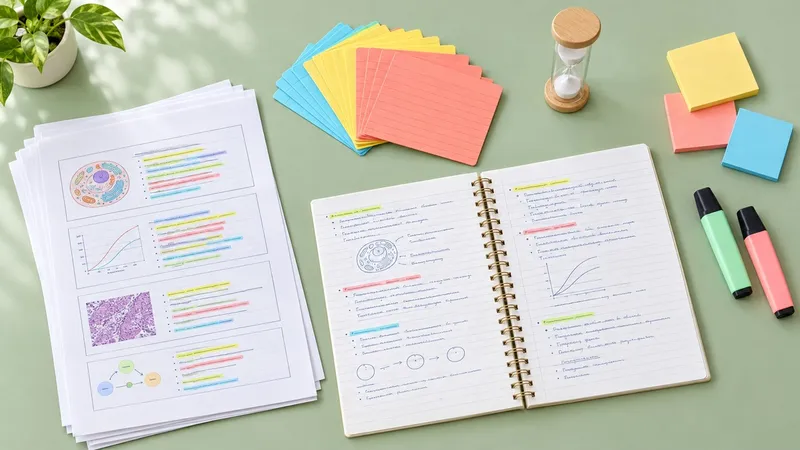
If the problem is that the lesson itself did not stick, Primo Notes works from the other end. It is not a photo math solver: you record the class, photograph the textbook page or add the lecture PDF, and Primo Notes turns it into a structured note, then builds a quiz and flashcards from that material so you practise recall instead of reading answers. Its Feynman mode asks you to explain the topic out loud and works through the gaps in your explanation, which is a direct test of whether you can do the problem without help.
The Verdict on Gauth
Gauth is fast, easy to use and usually correct on standard school problems, which explains its 100 million downloads. It struggles more on advanced and graphing questions, it never tells you how confident it is, and its default scan-and-read loop is the kind of AI use that research links to lower exam scores. The open class action over question data sent to Google, and a privacy policy that allows user content to be public, are reasons to keep personal details out of it.
Used to check work you have already done, Gauth is a reasonable study aid. Used to do the work, it costs you the skill the homework was meant to build.